


Do Heat Pumps Work in Winter? A Look at Cold Weather Performance
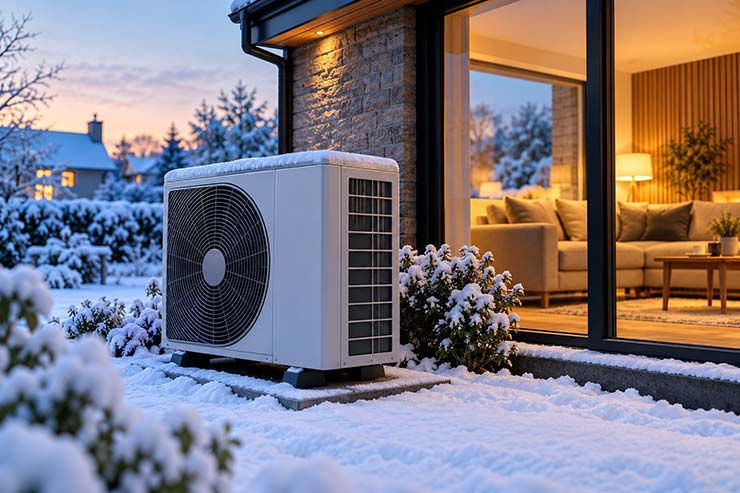
One of the most common questions homeowners ask when considering an air-to-air heat pump is simple: will it still work when it gets cold outside?
It is an understandable concern. If an air-to-air heat pump takes heat from the outside air, what happens when temperatures fall towards freezing or even below it?
The good news is that modern heat pumps are specifically designed to operate in cold conditions. Even when the temperature outside drops below freezing, there is still heat energy available in the air. An air-to-air heat pump can extract this energy, increase its temperature and transfer it inside your property.
For homeowners across Derbyshire and the Midlands, this means an appropriately designed and installed air-to-air heat pump can provide effective heating throughout the British winter.
How Does an Air-to-Air Heat Pump Work in Winter?
An air-to-air heat pump doesn't create heat in the same way as a gas boiler, electric fire or traditional electric heater. Instead, it transfers existing heat from one location to another.
The outdoor unit draws in outside air and passes it across a heat exchanger containing refrigerant. The refrigerant absorbs heat energy from the air before passing through a compressor, which increases its pressure and temperature.
This heat is then transferred indoors, where indoor units circulate warm air around your home.
It may seem surprising that useful heat can be extracted from freezing air, but outdoor air still contains thermal energy at temperatures well below 0°C.
This is why heat pumps are successfully used in countries with winters considerably colder than those normally experienced in the UK.
Do Heat Pumps Work Below Freezing?
Yes. Modern heat pumps can continue operating when outside temperatures fall below freezing.
The exact operating range depends on the manufacturer and model, but many modern systems are designed to continue providing heating at temperatures far below those normally experienced during a Derbyshire or Midlands winter.
What does change as the outside temperature falls is efficiency.
When it is relatively mild outside, a heat pump has an easier job extracting heat from the air and transferring it into your home. As the outside temperature drops, the system needs to work harder to extract the available heat.
This means electricity consumption can increase during particularly cold periods.
That shouldn't be confused with the heat pump no longer working. It simply means that, like virtually any heating system, operating conditions affect its performance.
How Efficient Are Heat Pumps During Winter?
One of the major advantages of heat pump technology is that the system transfers heat rather than relying entirely on electricity to generate it.
Heat pump efficiency is often described using its Coefficient of Performance (COP).
For example, a COP of 3 means the system is delivering approximately three units of heat for every unit of electricity consumed.
The precise COP varies according to outside temperature, the heat pump model, required indoor temperature, system design and other operating conditions.
Efficiency generally decreases as outdoor temperatures fall because the heat pump has to work harder. However, a well-designed modern system can remain an extremely effective method of heating a property throughout normal UK winter conditions.
Rather than focusing on a single headline efficiency figure, homeowners should consider the system's performance across an entire heating season.
What Happens When Frost Forms on the Outdoor Unit?
Cold and damp winter weather can cause frost or ice to form on the outdoor heat exchanger.
This is normal.
Modern heat pumps are designed to deal with this through an automatic defrost cycle. The system temporarily reverses its operation to warm the outdoor coil and melt accumulated frost.
Once the coil has been cleared, the heat pump automatically returns to normal heating operation.
You may therefore occasionally notice the outdoor unit behaving differently during very cold or damp weather. You might see steam or water around the unit as the frost melts.
This doesn't necessarily indicate a fault – it can simply be part of the heat pump's normal winter operation.
Are Air-to-Air Heat Pumps Suitable for UK Winters?
The UK is actually well suited to air-to-air heat pump technology because prolonged periods of extreme sub-zero temperatures are relatively uncommon compared with colder parts of Europe.
For much of a typical Midlands winter, outside temperatures remain within a range where a modern air-to-air system can operate effectively.
Air-to-air systems also provide a different heating experience from traditional radiators.
Instead of heating water and circulating it through radiators, indoor units deliver heated air directly into the rooms. This can allow a room to warm relatively quickly while also giving homeowners direct control over individual areas.
For properties currently relying on expensive direct electric heating, an air-to-air heat pump can be particularly attractive.
Correct Sizing Is Essential for Winter Performance
The performance of any heat pump depends heavily on choosing the right equipment for the property.
An undersized system may struggle to satisfy the heating demand during the coldest days of winter. An unnecessarily oversized system can also result in inefficient operation.
This is why a professional property survey is an important part of choosing an air-to-air heat pump.
Factors that should be considered include:
Property size and layout
Insulation levels
Number and size of rooms requiring heating
Window and glazing specifications
Existing heating arrangements
Position of indoor and outdoor units
Expected heat loss
Desired indoor temperatures
Correct system design can make a significant difference to both comfort and running costs.
Does Home Insulation Make a Difference?
Yes. Although an air-to-air heat pump can work in many different types and ages of property, reducing unnecessary heat loss helps any heating system operate more effectively.
Good loft insulation, appropriate wall insulation, modern glazing and draught proofing all help retain the heat being delivered into your home.
The less heat your property loses, the less energy the heat pump needs to use to maintain a comfortable temperature.
However, this doesn't necessarily mean that only newly built or exceptionally well-insulated properties can benefit from heat pumps. Each home should be considered individually.
Should You Leave a Heat Pump Running During Winter?
Heat pumps can often perform best when used differently from traditional heating systems.
Many UK homeowners are accustomed to running a boiler at high temperature for relatively short periods – perhaps for a couple of hours in the morning and again during the evening.
Heat pumps can benefit from maintaining a more consistent temperature rather than allowing a property to become extremely cold before asking the system to rapidly heat it again.
Modern controls also make it easier to manage temperatures according to your routine and the rooms you're using.
With an air-to-air system, individual indoor units can provide additional flexibility, allowing you to control the temperature in different areas of the property rather than necessarily heating every room in exactly the same way.
Heating in Winter and Cooling in Summer
One of the biggest advantages of an air-to-air heat pump is that its usefulness doesn't end when winter is over.
The same system can essentially operate in reverse during warm weather.
In winter, it transfers heat from outdoors into your home. During summer, it can remove unwanted heat from inside the property and transfer it outside, providing effective air conditioning.
You therefore have a single system capable of providing heating during winter and cooling during summer.
With UK summers experiencing periods of increasingly uncomfortable indoor temperatures, this year-round climate control can be an important consideration when comparing air-to-air heat pumps with conventional heating systems.
Getting the Best Cold Weather Performance From Your Heat Pump
Quality equipment is important, but installation and maintenance also play a major role in long-term performance.
The outdoor unit needs adequate airflow and should be positioned correctly. Indoor units also need to be selected and located appropriately so that warm air can circulate effectively through the required spaces.
Filters and components should be kept clean, and periodic servicing can help ensure the system continues operating efficiently.
Professional installation by appropriately qualified engineers is therefore essential.
Are Air-to-Air Heat Pumps Worth Considering?
If concerns about winter performance have been stopping you from considering a heat pump, modern technology should provide reassurance.
Heat pumps don't suddenly stop working simply because the temperature reaches freezing. They are engineered to extract heat from cold outside air and continue providing warmth at temperatures considerably below those normally experienced across the Midlands.
Their efficiency will vary with weather conditions, but correct specification, professional installation and sensible operation can provide reliable heating throughout winter.
Add the ability to provide air conditioning during summer and an air-to-air heat pump becomes a versatile year-round solution for controlling the temperature of your home.
Looking for an Air-to-Air Heat Pump Installer in the Midlands?
At Midland Heat Pumps, we specialise in air-to-air heat pump systems designed to provide efficient heating in winter and cooling in summer.
Every property is different, which is why selecting the correct system and positioning the units properly is so important. We can assess your property, discuss your heating and cooling requirements and recommend an appropriate solution.
Whether you're considering replacing expensive electric heating, adding efficient heating to an extension or conservatory, or simply want greater control over your home's temperature throughout the year, an air-to-air heat pump could be an excellent option.
Contact Midland Heat Pumps today to arrange a free property survey and find out whether an air-to-air heat pump is right for your home.


Comments